Smithsonian Bag Policy 2026 | Sizes, Lockers & Entry Guide
Wondering about the smithsonian bag policy before your visit to Washington, DC? The Smithsonian Institution sets one set of entry rules across its museums, but no single institution-wide bag size limit — policies vary by museum. Bags are hand-checked or X-rayed at every entrance, metal detectors run at most major museums, and lockers are only available at select sites. Here is the full breakdown so you pack right the first time.
Quick Answer
| Question | Answer |
|---|---|
| Is there a clear bag policy? | No — the Smithsonian does not require clear bags at any museum. |
| Are backpacks allowed? | Yes, subject to security screening; museum-specific limits apply. |
| Official institution-wide size limit | None published — each museum sets its own (e.g. 17″x26″ max at the National Museum of Asian Art). |
| Screening | Hand-check or X-ray of all bags; metal detectors at 9+ museums. |
| Bag storage | Lockers at select museums only — not universal. |
Official Policy Verification & Source Check
- Official source: si.edu/visit/tips — Smithsonian Entry and Guidelines. Institution-wide rules: all bags hand-checked or X-rayed, metal detectors at listed museums, prohibited items listed; no institution-wide bag-size limit published.
- Museum-specific rule: asia.si.edu — National Museum of Asian Art visitor policies: “Bags larger than 17 x 26 inches are not permitted”; “Nothing is permitted to be carried on one’s back”; locker room available.
- Museum-specific storage: nmaahc.si.edu — African American History and Culture FAQs: lockers in two sizes (large 12″x25″x19″, small 12″x15″x19″), big enough for a backpack, purse or carry-on — not luggage.
- Source type: official Smithsonian Institution and official museum websites. Last checked: November 3, 2026. Confidence: high — rules come from the Smithsonian’s own Entry and Guidelines page.
Notes on conflicting figures
Several third-party travel blogs (e.g. baggagegear.com, postureinfohub.com) publish a specific Smithsonian backpack limit of 18″x14″x8.5″ as if it were the official Institution rule. That figure does not appear on the Smithsonian’s official Entry and Guidelines page — there is no single institution-wide size cap. The Smithsonian leaves size limits to individual museums, like the National Museum of Asian Art’s official 17″x26″ maximum. Treat blog figures as guesses, not policy.
How We Check This Policy
We cross-check the venue’s official bag-policy page against Google’s AI Overview and third-party travel pages before publishing. When numbers disagree, the venue’s own page wins and the conflicting figure is named above — never blended.
What Makes the Smithsonian’s Bag Policy Different
The Smithsonian is not one building — it is 21 museums, galleries and a zoo — so there is no one-size rule like a stadium’s clear-bag policy. The Institution publishes a shared security baseline (screening, prohibited items, conduct), then each museum adds its own rules for bag sizes, lockers and where bags may go.
That means the planning unit is the museum, not the Institution. The African American History and Culture Museum runs lockers and full metal-detector screening; the National Museum of Asian Art caps bags at 17″x26″ and bans anything carried on your back; the Natural History Museum offers no bag or coat storage at all. Check the page of each museum on your itinerary.
Admission is free at nearly every site, so entry screening is the only gate. The Smithsonian’s advice is simple: limit what you bring. Fewer belongings means a faster trip through the checkpoint — and a lighter day of walking the Mall.
Allowed Bags and Size Limits
| Bag Type | Status | Max Size | Notes |
|---|---|---|---|
| Backpack / daypack | Allowed (screened) | No institution-wide limit | Museum-specific caps apply (e.g. 17″x26″ at Asian Art) |
| Purse, tote, messenger bag | Allowed (screened) | No institution-wide limit | Hand-check or X-ray at entry |
| Camera bag | Allowed | No institution-wide limit | Still/video photos for noncommercial use only |
| Diaper bag / medically necessary bags | Allowed (screened) | No institution-wide limit | Medical supplies and devices explicitly welcome |
| Suitcases / large luggage | Effectively excluded | — | Won’t fit lockers; no other storage facility |
Purses/Totes
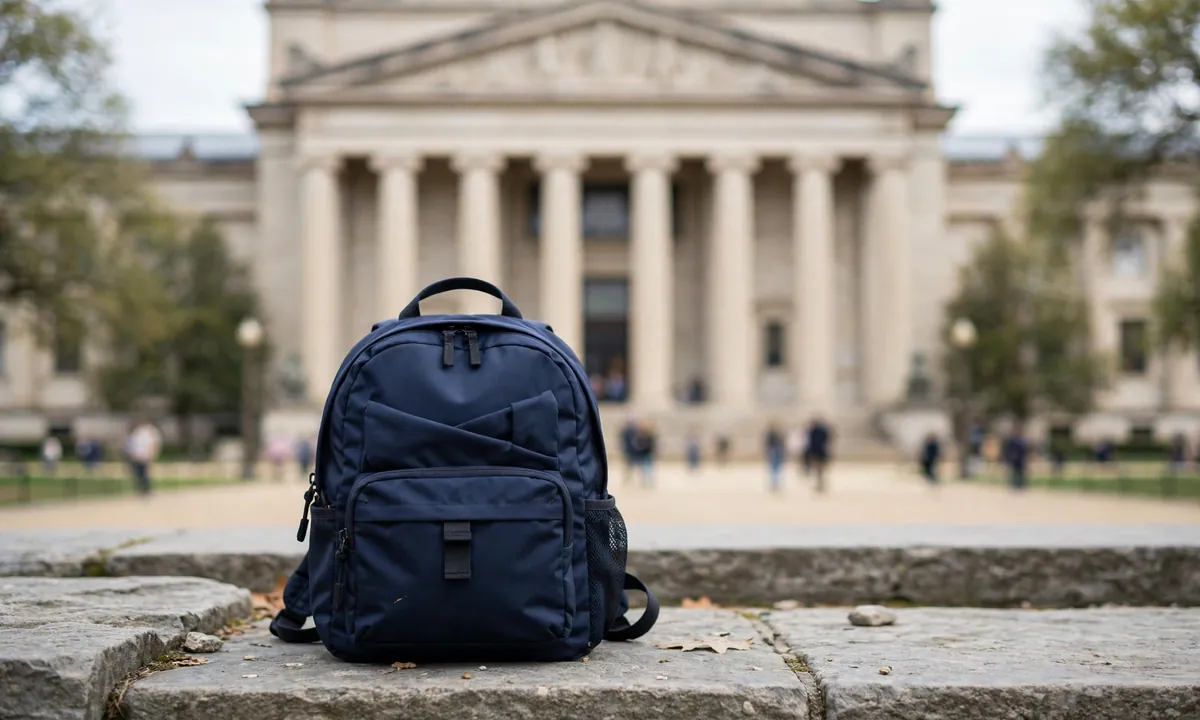
Purses, totes and messenger bags are welcome at every Smithsonian museum, subject to the same hand-check or X-ray screening as everything else. There is no clear-bag requirement anywhere on Smithsonian premises.
One practical note: nothing may be carried on your back at the National Museum of Asian Art — a backpack must be carried in your hand or stored in its locker room there. Other museums may ask you to wear smaller backpacks on your front in crowded galleries.
Diaper and Medical Bags
The Smithsonian explicitly welcomes visitors to bring any medical supplies, devices or equipment they might need. Note the caveat: public storage is not available at all locations, so plan to keep medically necessary items on your person throughout the visit.
Dedicated lactation rooms are available at the Air and Space Museum (DC), African American History and Culture Museum, American History Museum, Natural History Museum, Postal Museum and the National Zoo — ask any information desk for locations.
Security Screening: How Entry Actually Works
At many museums you will be greeted at entry by security personnel who hand-check every bag, briefcase, purse and container. Bag checks may be conducted by hand or via an X-ray machine, depending on the site.
Metal detectors run at the Air and Space Museum (DC and Udvar-Hazy Center), the African American History and Culture Museum, the American Art Museum, the American History Museum, the Natural History Museum, the Portrait Gallery, the Postal Museum and the American Indian Museums (DC and New York). Visitors who cannot walk through a detector are hand-screened with an electronic wand.
On-Site Bag Storage
Lockers exist — but not everywhere. The Smithsonian lists visitor lockers at the African American History and Culture Museum, the American History Museum, the Asian Art Museum (Freer and Sackler), the Hirshhorn Museum, the Postal Museum and the Udvar-Hazy Center. American History’s lockers come in small, medium and large, though their narrow width makes suitcase-sized bags unlikely to fit even the largest.
The National Museum of Natural History offers no coat, bag or locker storage at all — travel light there. And a standing rule across the Institution: do not leave personal belongings unattended, and do not leave bags stored at one museum while you visit other sites.
Food, Beverage and Other Prohibited Items
Food and drinks are restricted inside exhibition areas — the standard advice is to eat at museum cafes or outside on the Mall. The American History Museum notes that brown-bag lunches may be eaten on its terrace or the National Mall, but it offers no storage for them inside.
Tripods, monopods and selfie sticks are prohibited in all museums and gardens as a preventive measure to protect visitors and collections. Still and video photography is permitted for noncommercial use only. Smoking, including e-cigarettes, is prohibited in all Smithsonian facilities.
Prohibited Items
- Firearms (federal facilities accept no concealed-carry permits; limited law-enforcement exceptions)
- Sharp items — knives (including pocket and Swiss Army style), screwdrivers, scissors
- Pepper spray and mace
- Placards, signs and banners
- Tripods, monopods and selfie sticks
- Dogs and other animals (service dogs welcome; emotional support animals not covered)
- Illegal drugs
- Smoking and e-cigarettes in all facilities
- Commercial photography equipment without prior permission
- Unattended bags anywhere on Smithsonian premises
Packing Strategy for Faster Entry
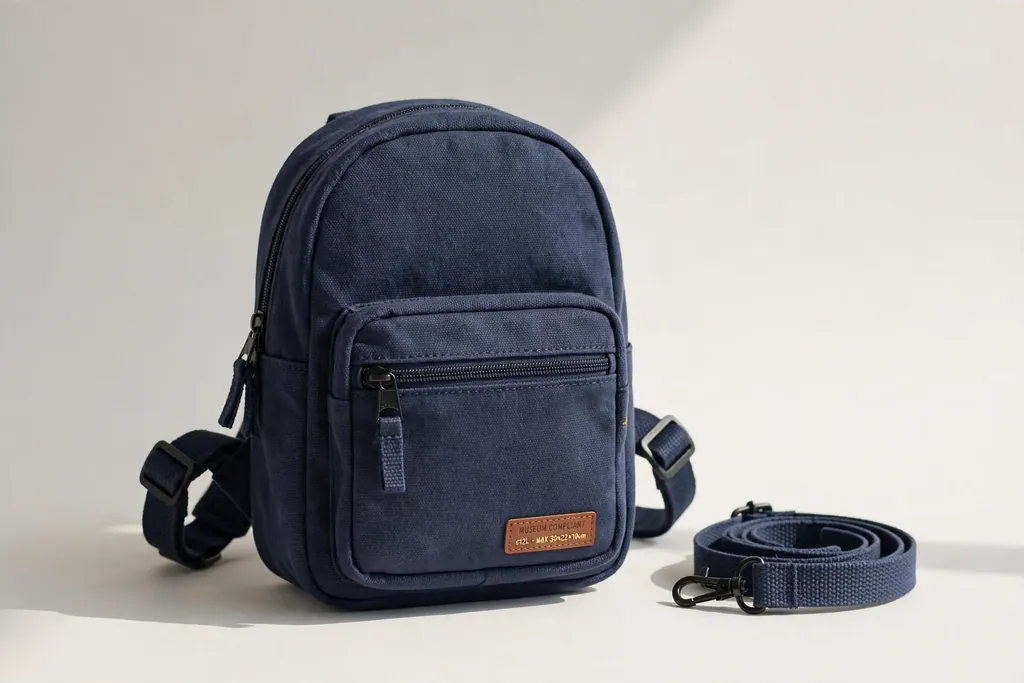
Bring one small bag and nothing more. The Smithsonian’s own advice is to limit personal belongings and bags — every item you bring gets hand-checked, so a small daypack beats a loaded tote every time.
Pick a front-carry bag. A small crossbody or daypack you can swing to your front keeps you compliant even in museums with back-carry restrictions, like the National Museum of Asian Art.
Plan storage per museum, not per day. Lockers exist at six sites but not at others like Natural History. If your itinerary mixes both, carry only what you can keep on you all day.
Category-Specific Packing Tips
Mall-hoppers visiting multiple museums: Never stash a bag at one museum while visiting another — it is explicitly against Smithsonian rules. Keep one light bag on you for the whole day.
Photographers: Cameras are fine for noncommercial still and video shots, but leave the tripod, monopod and selfie stick at the hotel — all three are prohibited in museums and gardens. A small camera bag is allowed and screened like any other bag.
Families: Strollers are allowed in most museums, but note the Zoo bans strollers inside exhibit buildings. Diaper bags are screened at entry; pack light since storage is limited.
Before You Go Checklist
- ☐ One small bag only — backpack, purse or crossbody (no clear bag needed)
- ☐ Bag sized for museum-specific limits (17″x26″ or smaller for Asian Art)
- ☐ No knives, pepper spray, or selfie sticks
- ☐ Tripod/monopod left behind (prohibited everywhere)
- ☐ Medically necessary items kept on your person (storage not guaranteed)
- ☐ Snacks planned for cafes or outdoor areas, not exhibition halls
- ☐ Comfortable shoes and layers — Smithsonian days are long walks
- ☐ Photo ID not required (admission is free), but keep valuables secured
- ☐ Check the specific museum’s page for its locker and storage rules
FAQs
What is the Smithsonian bag policy?
The Smithsonian hand-checks or X-rays all bags at entry, runs metal detectors at most major museums, and prohibits weapons, knives, pepper spray and selfie sticks. There is no institution-wide bag size limit — individual museums set their own.
Can you bring a backpack into the Smithsonian?
Yes. Backpacks and daypacks are allowed and screened at entry. Note museum-specific rules: the National Museum of Asian Art does not allow bags larger than 17″x26″ and bans anything carried on your back.
Does the Smithsonian have lockers?
Some museums do: African American History, American History, Asian Art, Hirshhorn, Postal and the Udvar-Hazy Center. Others, like the Natural History Museum, offer no bag storage at all.
Are there metal detectors at the Smithsonian?
Yes, at the Air and Space Museum (both locations), African American History and Culture, American Art, American History, Natural History, Portrait Gallery, Postal Museum and the American Indian Museums. Other sites use hand screening.
Can I bring food into the Smithsonian?
Food and drinks are restricted in exhibition areas. Eat at museum cafes or outside — the American History Museum specifically suggests its terrace or the National Mall for brown-bag lunches.
Is photography allowed in the Smithsonian?
Still and video photography for noncommercial use is permitted unless posted otherwise. Tripods, monopods and selfie sticks are prohibited in all museums and gardens.
Related Bag Policies
- The Met Bag Policy Guide
- Shedd Aquarium Bag Policy Guide
- Pearl Harbor Bag Policy Guide
- Georgia Aquarium Bag Policy Guide
Conclusion
The Smithsonian bag policy is simpler than the 21-museum footprint suggests: bring one small bag, expect it to be searched, and leave the selfie stick and pocketknife at the hotel. There is no clear-bag rule and no single Institution-wide size limit to trip you up.
The only real planning work is per museum: confirm locker availability for your specific stops, respect gallery rules like the Asian Art Museum’s back-carry ban, and never park a bag at one museum while you tour another. Pack light and the checkpoints go fast.